
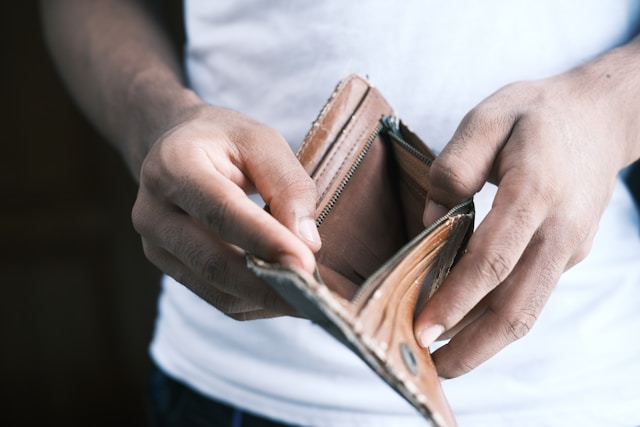
Picture this, no matter how hard you work, no matter how many hours you are putting in, whatever money you gain just disappears as quick as it comes, you’re not alone nor are you imagining things. Being broke is stressful and expensive. Most people don’t actually realize just how expensive it is.
This isn’t going to be about typical bad choices or avoiding Starbucks. It’s about everyday life, and how it quietly costs more when you don’t have a financial cushion to lean back on. But don’t despair yet, the good new is that once you understand what’s happening, you can take action and start your journey in breaking the cycle.
Are you ready to talk about why it always feels like you are doing life on hard mode, and what actually helps.
Why being broke turns small problems into big headaches
Whenever you are tight on money, suddenly, nothing stays small for long.
It always starts with a minor thing, like a small car issue that you ignore because you can’t afford to deal with it at the moment. Or a bill that just slipped your mind turning into a late fee. What was a small inconvenience slowly transforms into a full-blown financial mess.
All of this is not actually bad luck. It’s the result of lack of margin.
When you’re broke, you’re kind of forced to push things back instead of preventing problems. And those delayed problems usually cost you more than you ever thought they would later on.
The hidden “poor tax” most people don’t see
When you don’t have money at the ready, there’s a penalty being built quietly into your everyday life. Simply because the cash isn’t available to you at the right time, you end up paying more for the same things later.
This is what people often call the ‘poor tax’. Being broke was never a choice, but life doesn’t care and will charge you extra when you don’t have options.
Pay more because you can’t afford buying in bulk
Everyone knows that buying in bulk is cheaper. But it only works if you can actually afford the upfront cost.
When you are living paycheck to paycheck (like most Americans), you’ll have no choice but to buy smaller quantities more often than you’d like. These are the same products, but with higher prices. Over time, these small things add up quietly and relentlessly.
Everyday supplies, household products, groceries, diapers, cleaning products, and the list goes on.
Buy cheap now and pay for it later
When money is tight, buying for long-term becomes a luxury you can’t afford.
You buy what you can pay for today, not what can last you longer. That means buying cheap things you’ll replace more often, fixing the same issues repeatedly, or even paying twice the amount to solve the same problem.
It actually feels like you’re saving money in the moment, but as time goes on, it drains you.
How the bank’s system punishes you for having a low balance
Here is what makes all of this so frustrating.
You keep your checking account at a healthy balance? Great! The banks will generally treat you well. You’ll enjoy less fees and fewer problems.
But if you don’t, one small mistake can trigger many penalties.
One forgotten subscription payment pushes your account towards a negative balance. Suddenly an overdraft fee shows up, and it’s way bigger than the original charge you had to pay. You didn’t even borrow much and you haven’t planned for it, but you still paid a massive price for it anyway.
The thing is, these fees aren’t aimed at people with plenty of money. They are there to take advantage of people who are already struggling.
Why stressing over money makes everything harder
Financial stress doesn’t just affect your bank account. It also has major effects on how you think.
If you spend your time worrying about necessary expenses such as rent, car loans, food, or other bills, your brain tends to run on survival mode. As a result, planning long-term becomes harder and good decisions require more effort.
This pushes people under financial pressure to:
- Put off important repairs.
- Accumulate debt with high-interest rates.
- Make short-term choices they often regret later.
This doesn’t have anything to do with intelligence or discipline. It’s all a result of being overwhelmed.
The big life expenses that keep you stuck
Some of the most harmful financial traps actually come from things most people need.
Cars and bad credit
Most people in the US or Canada do need a car to work, and your options depend drastically on your savings and how good your credit score is.
Otherwise, your only option would be buying a car that’s less reliable, with higher interest and frequent repairs. That combination is exactly what makes it incredibly hard to get ahead in life.
Renting
There is nothing wrong with renting, but it’s definitely more expensive long-term.
When a big portion of your income is going towards rent, it feels almost impossible to save. And without savings, your housing costs stay high. It’s an unending loop.
Your time is the biggest cost you keep forgetting about
That’s why being broke doesn’t just cost you money, but also costs valuable time.
Tasks that are supposed to be simple take longer. Quick errands require more planning. Everything tends to feel harder and take much more time.
That lost time could be spent learning new skills, building side hustles, or just resting. But over the years, that lost time ends up limiting your potential to earn more in the future.
Why you can’t think about investing yet
The first thing you always here when it comes to money and personal finances is investing, everyone likes to jump straight to it. Yes, it is important, but it only works once you’re stable.
It can’t be the first move you take when you’re busy dealing with high interest, bills, fees and unforeseen emergencies. At this stage, the first win isn’t the stock market. It’s stopping the bleeding.
Focusing your efforts on paying off high-interest debt and avoiding unnecessary penalties often give you better returns that investing could never match at this stage in your struggle to break free.
The power of a small financial buffer
I’m sure you have heard about the emergency fund before. Here is why it matters so much.
It won’t make you rich, but it gives you options.
With an emergency fund at hand, a flat tire is only an annoyance instead of a crippling catastrophe. A surprise fee doesn’t push you towards a bad decision. This is where you understand that even a small buffer changes how your experience with money.
Granted, setting aside this first chunk of money is the hardest thing you do, but it’s very important to your financial success.
How to break the cycle
Of course you don’t need to fix it all at once. But you have to be mindful and start identifying where you’re losing money simply because you don’t have money. Which subscriptions, small luxuries, impulse purchases and repeated emergencies.
Focus on the biggest leak first and plug it as fast as possible. There must be things you can cut back on, even temporarily. Start building that buffer that will allow you to use your money to permanently solve problems at once instead of repeatedly.
Remember, discipline is key, and progress always beats perfection.
Final thoughts
Feeling stuck financially is something many of us go through, it’s very common and doesn’t mean you’re bad with money. It’s just that being broke comes with penalties and what’s called the poverty tax that most people never realize.
Once you know that it exists, you can stop the blame and start working your way out of this loop.
The goal is not trying to get rich quick, it’s trying to stop paying more just to survive. Start by trusting yourself and acknowledging that you can win.
FAQ
Why being broke is so expensive?
Because not having cash at hand forces you to pay extra fees, high-interest, and short-term fixes that add up.
Should I save first, then invest?
Yes, for most people. Avoiding high interest loans and building an emergency fund comes first.
What’s the best first financial goal?
Building a 3 or 6-month emergency fund to cover your expenses.


Leave a Reply