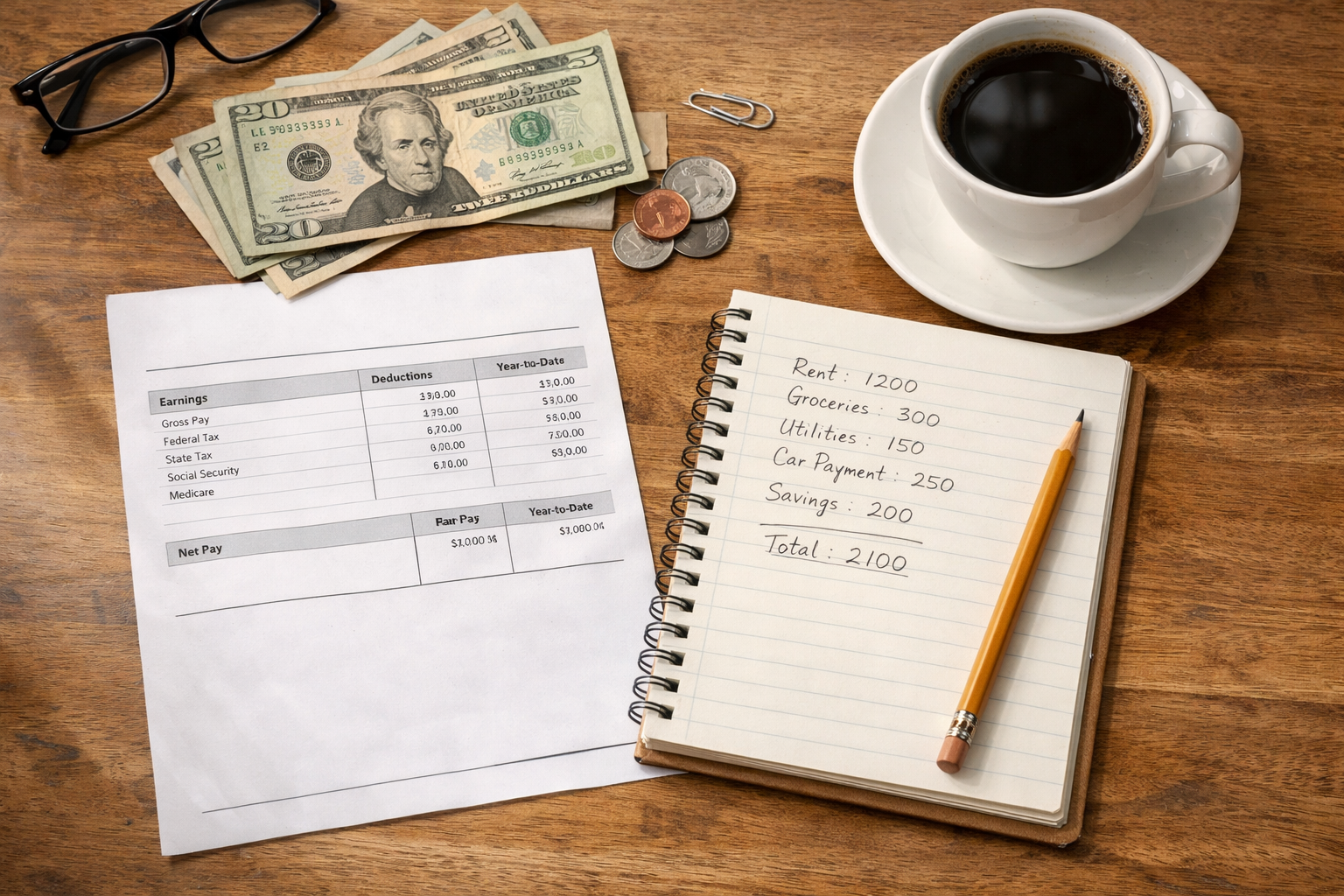
You get paid. You check your bank account. And somehow, it already feels like not enough.
You’re not imagining it. Between taxes, benefits, housing, and transportation, most people lose more than half their paycheck before they make a single real choice about their money. Here’s exactly where it goes — and why it feels like it disappears so fast.
First, the government takes its cut
Before your money even hits your bank account, federal taxes are already gone. The U.S. uses a progressive tax system, meaning the more you earn, the higher percentage you pay on the upper portion of your income. For 2026, brackets run from 10% up to 37% depending on your income level.
But income tax isn’t the only thing coming out. You also pay FICA taxes — which fund Social Security and Medicare — on every single dollar you earn:
- Social Security: 6.2% on income up to $184,500
- Medicare: 1.45% with no income limit
- High earners: An extra 0.9% Medicare surcharge kicks in above $200,000
If you live in California, New York, or several other states, you’re also losing a slice to state-level programs like disability insurance or paid family leave on top of all that.
The good news is you don’t pay federal income tax on your full gross salary. For 2026, the standard deduction is $16,100 for single filers and $32,200 for married couples filing jointly — which lowers the income you’re actually taxed on.
Then workplace benefits take another chunk
Even after taxes, your paycheck isn’t done shrinking. Health insurance is usually the next biggest hit. In 2025, the average worker with family coverage paid around $6,850 out of pocket toward their premiums — and costs are expected to rise another 6.7% in 2026.
If your employer offers an HSA or FSA, contributing to those accounts lowers your taxable income, which helps. But it’s still money leaving your paycheck every two weeks whether you like it or not.
Then the big two eat what’s left
Once your net pay finally lands in your account, housing and transportation are waiting. Together, these two categories swallow more than 50% of the average household’s spending:
- Housing takes up about 33% of the average budget — and it’s been rising
- Transportation (car payments, gas, insurance) takes another 17%
- Food adds roughly 13% more, and a big portion of that is takeout and delivery
Do the math: housing, transportation, and food alone can consume 60% or more of your take-home pay before you’ve thought about anything else.
Why the 50/30/20 rule doesn’t always work
You’ve probably heard the classic budgeting rule: spend 50% on needs, 30% on wants, 20% on savings. It’s a fine idea in theory. But for a lot of people — especially in high cost-of-living areas — housing and transportation alone already eat past that 50% mark. That leaves almost nothing for savings or anything discretionary.
For lower-income households, the numbers can be even more brutal. Basic necessities can consume 100% or more of take-home pay, with nothing left at the end of the month.
That’s not a personal failure. That’s a structural squeeze.
So what do you actually do with this?
Knowing where the money goes doesn’t fix everything, but it changes how you think about it. Instead of wondering why you feel broke, you start seeing the system clearly — and that’s where better decisions start.
A few places worth looking at:
- If your employer offers an HSA, contributing even a little lowers your taxable income right now
- Transportation is often the most controllable big expense — car choice matters more than most people realize
- Housing is harder to move quickly, but even small changes (a roommate, a refinance, a cheaper area) have outsized effects over time
The goal isn’t to feel guilty about where the money goes. It’s to stop being surprised by it.

Leave a Reply